
We Build Racetracks
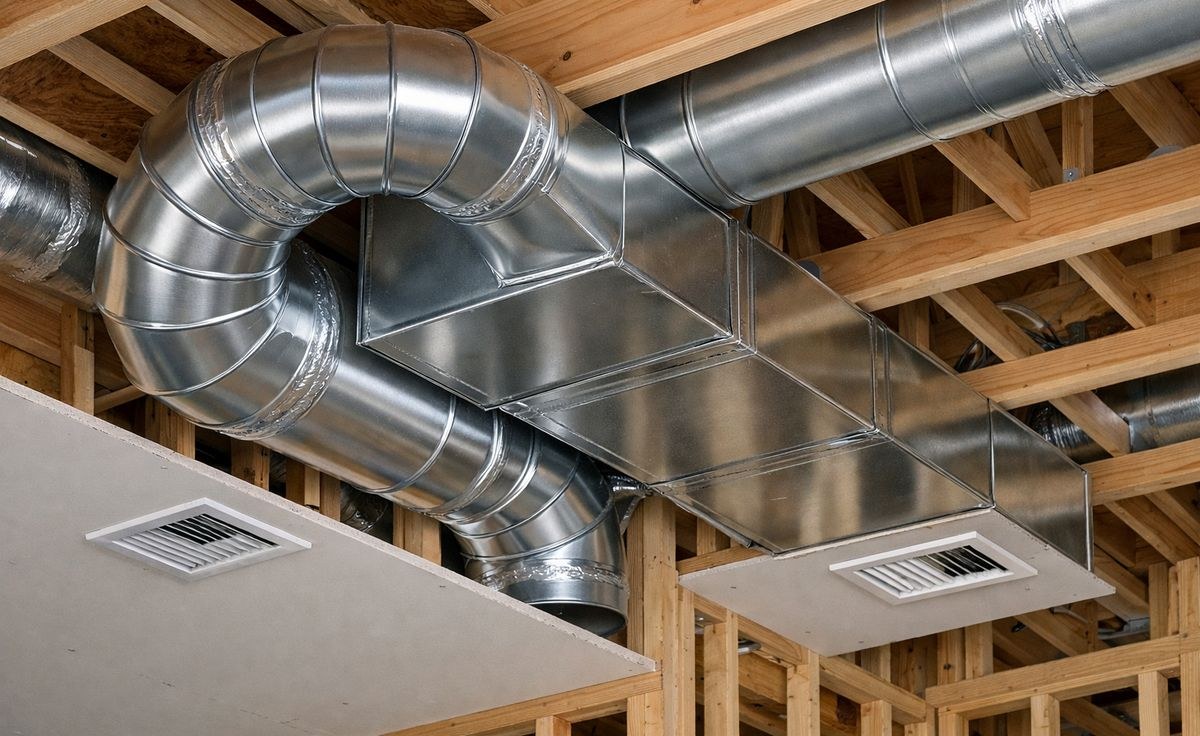
Your ductwork is a racetrack. Your equipment is a race car. You're the driver. Buy a McLaren — but if your track is a pothole-filled gravel road, you're not going 200 mph. We engineer racetracks. That's why your race car actually performs.
The Ductwork Dictates How It Goes
The air conditioner requires specific airflow requirements that the heat doesn't necessarily need to work. But when you meet those requirements for cooling, the heat actually works better too. Most companies just want to keep putting ducts in front of windows and doors — even ceiling registers pointed the same direction as floor registers would be. The throw pattern, the supply air temperature, the return air path — none of it matters to them because they've never been taught to think about it. We have.
Every HVAC company in Utah County wants to sell you equipment. A new furnace here, a new air conditioner there. They'll talk about SEER ratings, variable-speed compressors, and smart thermostats. But here's what none of them will tell you:
No matter how smart the equipment, bad ducts equal the same bills and the same comfort problems.
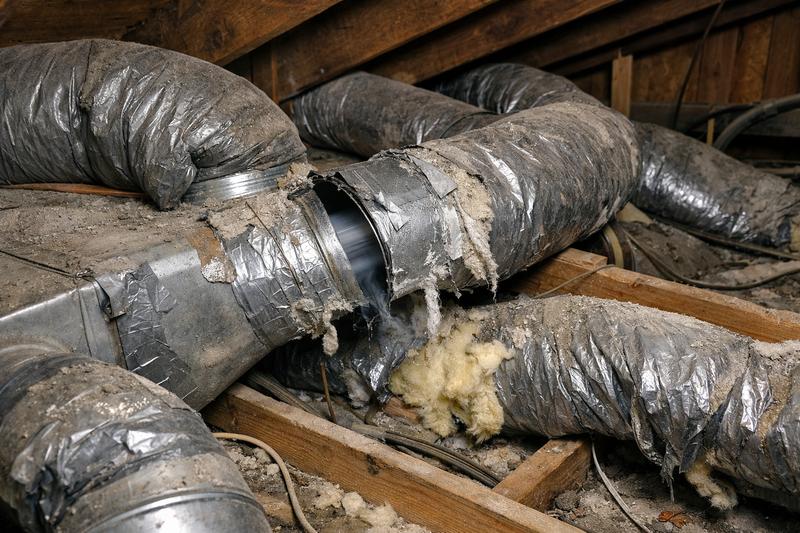
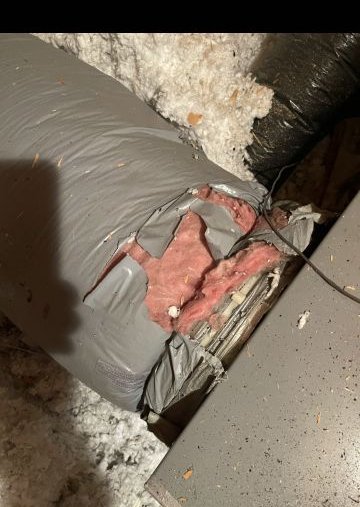
Think about it. You could buy the most advanced, efficient furnace on the market. But if the ductwork feeding your rooms is undersized, poorly routed, leaking at every joint, and was never designed by an engineer — that furnace is working overtime just to push air through a system that was never built for it. The ductwork dictates how it goes. Period.
What Most Companies Do
Sell you a new "race car" (equipment) and bolt it onto the same broken "dirt road" (ductwork). Your expensive new system fights the same airflow restrictions, the same undersized ducts, the same leaky connections. Your bills might drop slightly — but your comfort doesn't change.
What Polar Breeze Does
We engineer the racetrack first. We calculate exactly how much air each room needs, design the duct system to deliver it, and verify it works after installation. Your equipment runs efficiently because it's not fighting the duct system — it's working with a system designed for it.
The Snowball Story: 28 Years of Proof
In 1972, a Trane Climatuff compressor was returned to the factory in Tyler, Texas. It was sent back as dead — but it wasn't. Something in the system caused symptoms that got blamed on the compressor.
When Trane engineers hooked it up to a test bench with proper conditions — correct airflow, proper refrigerant charge, the right electrical setup — the compressor that was "dead" fired right up.
They named it Snowball.
Then they tried to kill it. They re-welded it into a continuous liquid flood-back test — one of the most brutal conditions a compressor can face. Liquid refrigerant flooding back into the compressor, 24/7. Over the next 28 years — from 1972 to 2000 — Trane technicians subjected Snowball to over 900 different failure scenarios. Low refrigerant, high head pressure, dirty coils, restricted airflow, voltage spikes, and every other torture test they could devise.
Snowball wouldn't die. It encased itself in a block of ice and kept running. At 3,500 RPM, that's the equivalent of a car running 60–70 mph continuously, covering 14.8 million miles. Snowball outlasted five U.S. presidents.
When the factory expanded and Snowball had to be retired in 2000, they built Snowball II — another Climatuff pulled from production — and put it through the same brutal conditions. Snowball II is still running today.
The lesson isn't just that Trane makes great compressors (they do). The lesson is this: that "dead" compressor was misdiagnosed. We don't know what killed it or why it was returned. Something in the system caused symptoms that got blamed on the compressor. Wrong airflow, wrong conditions, wrong diagnosis.
This is exactly what happens in homes across Utah every day. Homeowners replace equipment that was never broken — because the real problem was misdiagnosed. Nobody measured the airflow. Nobody checked the ductwork. They just blamed the equipment and sold a replacement.
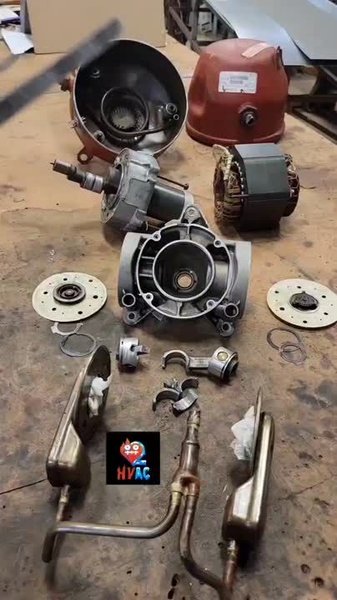
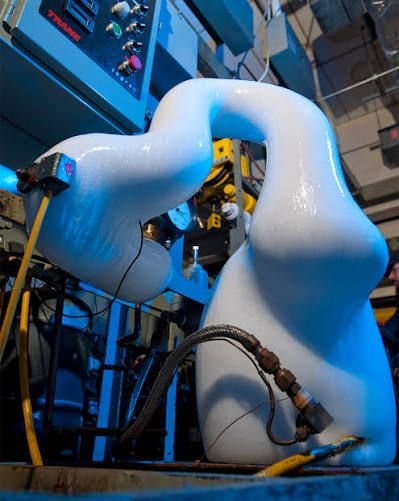
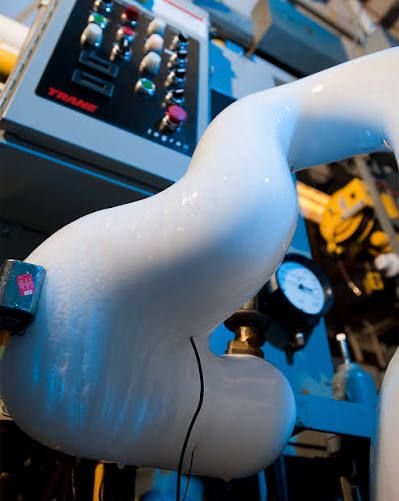
Given proper airflow, it ran for 28 years
and survived 900+ torture tests.
What Competitors Don't Do
We researched the top 25 HVAC companies in Utah. Here's what we found:
| What We Do | What They Do |
|---|---|
| Manual J load calculation (every project) | Maybe 30% do this |
| Manual D duct design with CFM verification | Almost none |
| Manual T register selection | None advertise this |
| Commissioning with measured data | Maybe 5% |
| Performance guarantee with remedy caps | Zero — we're the only one |
| Documentation package for homeowners | None provide this |
| ADPI verification available | None |
| Stamped plans by licensed designer | Rare |
The Typical HVAC Company
- No Manual D duct design — they "eyeball it"
- No commissioning — install and walk away
- No performance guarantees
- No documentation — no paper trail
- Equipment-focused sales pitch
- "Box swappers" — out with the old, in with the new
Polar Breeze LLC
- Manual J + Manual D on every project
- Full commissioning — test and verify everything
- Utah's only duct performance guarantee
- Complete documentation package
- Airflow and duct performance focused
- Design engineers, not box swappers
The HVAC Industry Has a Problem
These aren't our opinions. These are documented industry statistics.
What does this mean for homeowners? The vast majority of HVAC systems in Utah — including brand-new ones — were never properly designed, sized, or tested. They're running on guesswork.
That's why your upstairs is always hot. That's why your master bedroom never cools down. That's why one room is freezing while another is sweltering. The equipment isn't broken — the system was never designed.
Every 1 SEER point improvement equals approximately 7% more efficiency. But all the SEER ratings in the world won't help if the ductwork is choking the system.
Why Proper Duct Design Matters MORE in Utah

Utah has something almost no other state has: zero or negative latent heat load. In humid places like Houston or Miami, your air conditioner spends 30–40% of its energy just removing moisture from the air before it can even start cooling. In Utah, 100% of your AC's capacity goes directly to temperature reduction. That's sensible cooling.
This sounds like good news, and it is — but it also means:
- Oversized equipment is more noticeable. In humid climates, oversized AC accidentally dehumidifies (which feels okay even if inefficient). In Utah, oversized equipment just short-cycles — turning on and off rapidly, creating hot and cold spots, wearing itself out.
- Duct performance directly equals comfort. Since 100% of cooling goes to temperature, any airflow restriction or imbalance shows up immediately as a comfort problem. There's no "humidity buffer" to mask poor duct design.
- Proper sizing is critical. Manual J calculations matter more here because there's no latent load to pad the numbers. What you calculate is what you need — no more, no less.
This is why a proper Manual J and Manual D matter in Utah more than almost anywhere else in the country. And it's why we focus on duct performance first.
Home Value & Financial Benefits
Utah Rebates & Tax Credits
| Program | Covers | Amount |
|---|---|---|
| Federal IRA Tax Credit | Heat pumps | Up to $2,000/year |
| Federal IRA Tax Credit | Central AC | Up to $600 |
| Rocky Mountain Power Wattsmart | Heat pumps | Up to $2,000 |
| Rocky Mountain Power Wattsmart | Ductless mini-splits | Up to $1,700 |
| Rocky Mountain Power Wattsmart | Smart thermostats | Up to $100 |
| Enbridge ThermWise | High-efficiency furnaces | Varies |
Polar Breeze provides all supporting documentation for rebate and tax credit applications. We do not guarantee approval — but we give you every document you need.
See all the dataBelow 70°F. Guaranteed.
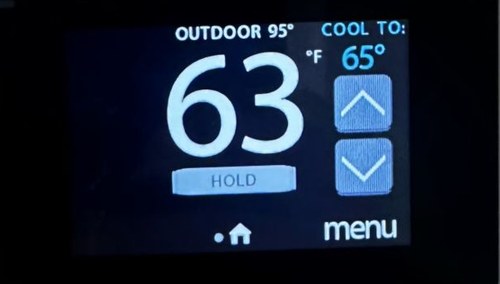
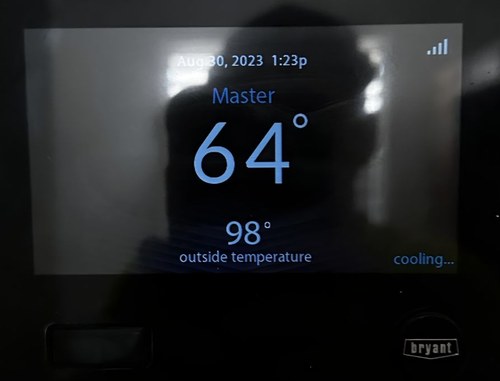
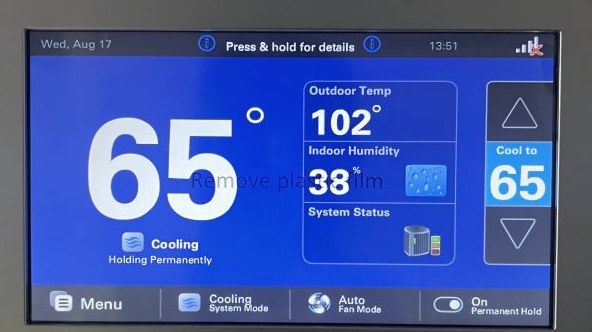
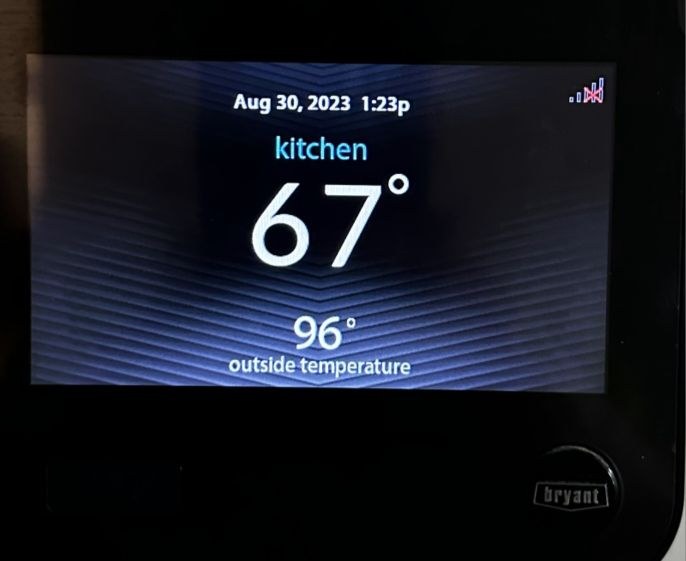
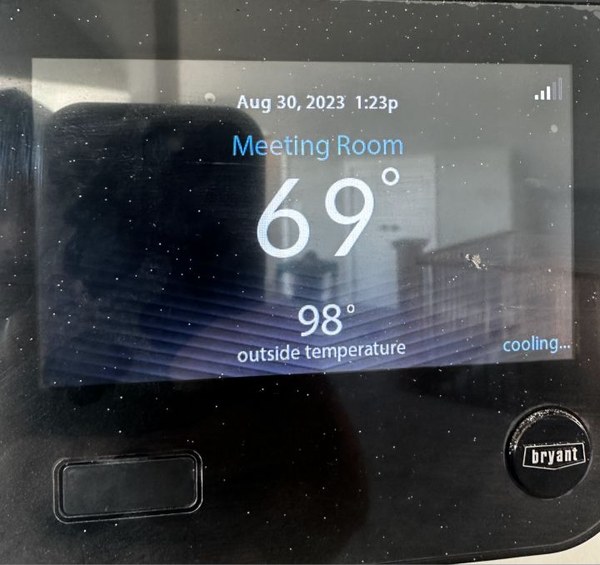
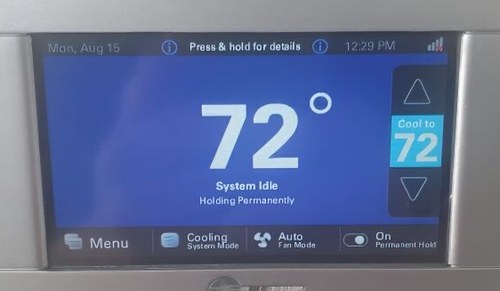
Our Elite tier guarantees your home will cool below 70°F and heat above 75°F with no more than 1°F difference between any room on the same floor. That's not marketing — it's engineering. And we back it with up to $100,000 in remedy coverage.
The Proof: Below 70°F, Documented.
Real thermostat readings from real Utah homes. Every photo shows indoor temperatures below 70°F with triple-digit outdoor heat.
Brands We Trust — And Why
Trane
The Snowball legacy. A "dead" compressor that ran for 28 years and survived 900+ torture tests. Their saying: "If a product doesn't make it through our test lab, it doesn't get made." Built in Tyler, Texas.
Carrier
Willis Carrier invented modern air conditioning on July 17, 1902 — at age 25. Standing on a foggy Pittsburgh train platform, he realized he could control humidity by passing air through water. AC wasn't designed for comfort — it was designed to control a process. Comfort was the byproduct of getting the engineering right. That's exactly what we do.
Bryant
America's first residential gas heating system in Denver, CO (1918). First 90% efficient furnace with variable-speed operation (1981). First environmentally sound refrigerant — Puron/R-410A (1996), years before the government mandated R-22 phase-out. Longest-standing Indy 500 sponsor since 1958.
Mitsubishi Electric
Pioneered inverter-driven compressor technology — the foundation of all modern variable-speed and modulating equipment. Inverter technology varies compressor speed from ~25% to 100% capacity, delivering up to 40% more efficiency than traditional on/off compressors. When we specify modulating equipment for Elite tier, Mitsubishi is the benchmark.
Aprilaire
Indoor air quality pioneer since 1954. Invented the first truly effective whole-home humidifier in Madison, Wisconsin. Wisconsin winters inspired the focus on dry air problems — exactly like Utah. Still headquartered in Madison, American made. Most Utah homes have terrible humidity control. Aprilaire solved this 70 years ago.
We specify equipment based on your home's needs, not dealer incentives. Make, model, and brand requests are welcome — we'll discuss any design implications.
Why We Place Registers Where We Do
We place supply registers in the ceiling or high side wall — never on the floor. Returns go on low walls. Why?
- Better air distribution — ceiling supply throws air across the room, mixing properly before reaching occupants
- Improved air quality — no toys, dust, food, or construction debris falling into floor registers
- Easier cleaning — floor registers are traps for dirt, pet hair, and small objects
- No furniture placement restrictions — floor registers limit where you can put couches and beds
- Gravity assists the return air path — warm air rises, cool air falls. Low returns capture the stratified air naturally
- Better for cooling — cold air from ceiling registers drops naturally, cooling more effectively than floor supply fighting gravity
It's better engineering. Period.
Air Mixture, Air Turnover & Air Return — The Real Problem
Air mixture, air turnover, and air return are THE reasons Utah AC systems run longer than they should. When done right, Utah homes should run LESS than Texas — because we have lower heat load with zero humidity to fight. The ductwork is the bottleneck.
Air Mixture
When supply air enters a room, it doesn't instantly make the room the same temperature. The supply air has to mix with the existing room air before you feel the difference. If the supply register is in the wrong spot, or the throw pattern is too short, the cold air dumps straight down and pools on the floor — while the rest of the room stays warm. Proper register placement and sizing ensures supply air mixes thoroughly with room air so you get even temperature from floor to ceiling.
Air Turnover
Air turnover is how many times per hour the entire volume of air in a room cycles through the HVAC system. A typical residential room needs 6–8 air changes per hour for good comfort. If turnover is too low, the room feels stagnant — warm spots near windows, cold spots near exterior walls. If turnover is too high (oversized ducts or equipment), you get drafts and noise. We calculate the exact turnover rate for every room.
Air Return
The return air path is the most overlooked piece of residential HVAC. Supply air gets all the attention — but if there's no clear path for air to get back to the equipment, the whole system chokes. Undersized or missing return paths cause:
- Rooms that pressurize when the door is closed (air can't escape)
- Doors that slam shut or won't stay open
- Increased static pressure on the blower (higher energy bills, shorter equipment life)
- Uneven temperatures — some rooms get too much air, others starve
Every room needs a return air path. Whether it's a dedicated return duct, a transfer grille, or a jump duct — the air has to have a way home.
What Right Looks Like — Real Performance Data
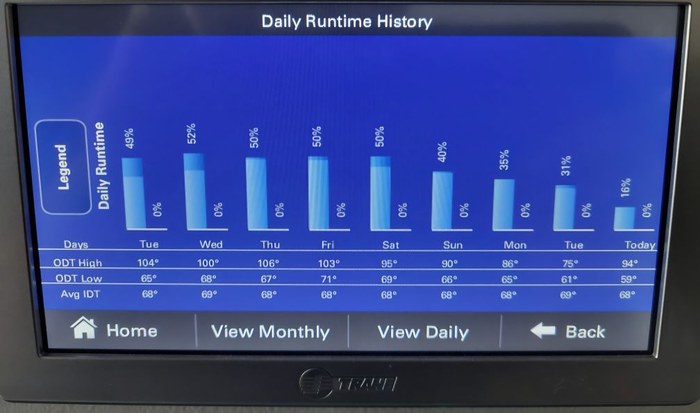
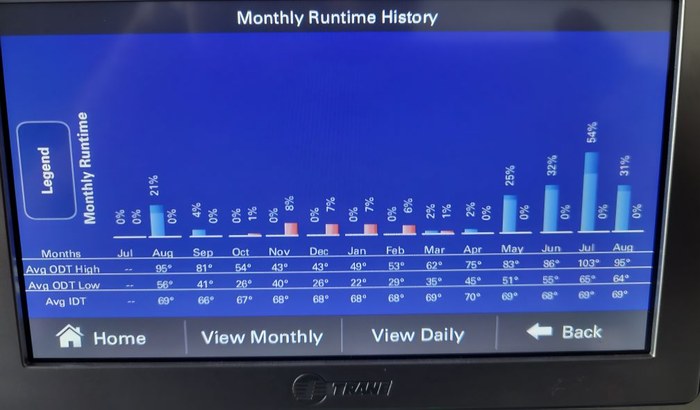
These charts are from a home with 5 modulating/variable-speed systems designed by Polar Breeze. You're looking at long, low-speed runtimes — and that's exactly what it should be doing. This is what properly designed HVAC looks like.
Why long runtimes are BETTER: Modulating equipment doesn't slam on at full blast and shut off. It ramps down to the lowest speed needed and runs gently for extended periods. The result: more even temperatures room-to-room, better humidity control, whisper-quiet operation, less mechanical stress on components, and significantly longer equipment life. The system isn't fighting — it's cruising.
The electric bill tells the story: This home runs 5 units maintaining below-70°F temperatures across the entire house — and the electric bill is $40–50/month. Average indoor temperature: 68–69°F all year, even when outdoor highs hit 103°F. Five systems, five zones, total comfort — for less than most people pay for one system.
Now compare that to a typical Utah home: A single-stage system running at full blast all day, still can't hit setpoint. Electric bills of $150–200+ per month. The upstairs is always hot. The master bedroom never cools down. That system is fighting undersized ducts, poor air distribution, and bad design. It runs constantly because it has to — and it still loses.
Our system runs longer because it chooses to — at a whisper, at low cost, with every room within 1°F of setpoint. The difference isn't runtime — it's design. A well-designed system with modulating equipment will show higher total runtime hours, but at a fraction of the energy cost and with dramatically better comfort. That's the whole point of variable-speed technology — and it only works when the ductwork is designed to support it.
This is the difference proper duct design makes.
Same House, Two Systems: Main Floor (Modulating) + Basement (Two-Stage)
This home has both a modulating system on the main floor and a two-stage system in the basement. The phone app data below shows the basement two-stage system — different technology, same result: consistent temperatures, low energy use, comfortable everywhere.
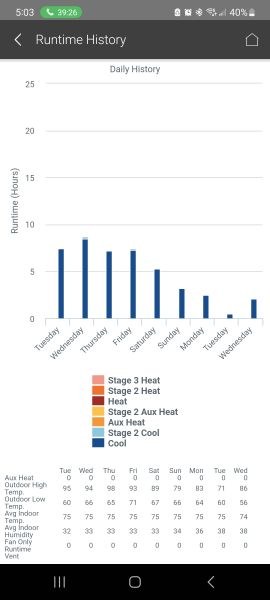
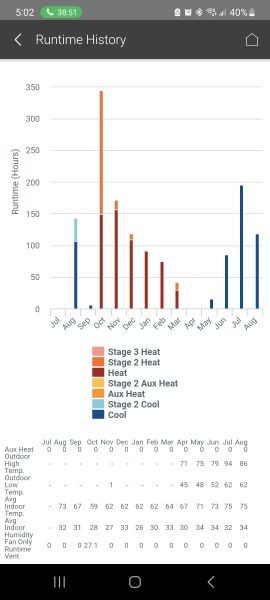
Two different equipment types in the same house. Both performing. Both comfortable. Both efficient. The common denominator isn't the equipment brand or type — it's the duct design.
The 90% Furnace Condensate Problem
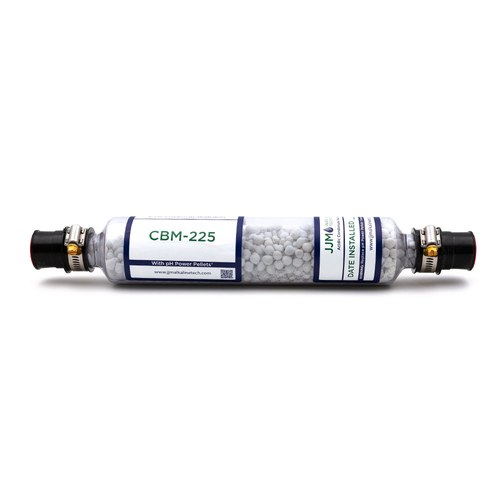
Every 90% efficiency furnace (also called a condensing furnace) produces acidic condensate as a byproduct of combustion. This liquid drains into your plumbing system. Without a condensate neutralizer, the acid slowly corrodes your drain pipes, P-traps, and sewer connections.
A neutralizer costs under $100 and protects your entire drain system. Almost nobody installs them. We always recommend one.
Floor Registers: Mini Golf, That's About It
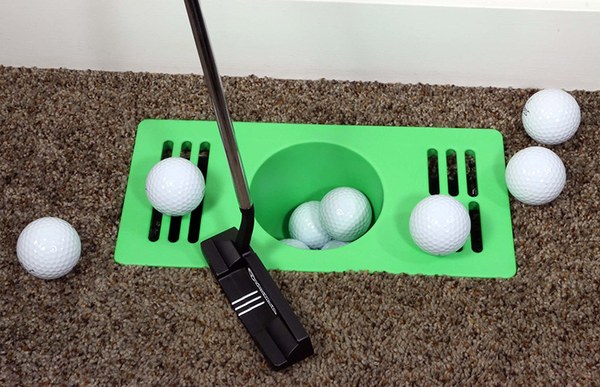
This is about all floor registers are good for — mini golf. Floor supplies collect dust, toys, construction debris, food, and anything else gravity can deliver. We place supply registers in ceilings and high side walls where they belong.
Better air distribution, better air quality, easier maintenance. Returns go on low walls. Gravity assists the return air path — warm air rises, cool air falls. It's better engineering.
Ready to Build Your Racetrack?
Whether it's a new build, a struggling existing system, or an emergency — we solve the hidden problem: airflow.
Tell Us About Your Home