
Homeowner Resources
Free HVAC education so you can make informed decisions — whether you hire us or not. Understanding your system protects you from bad advice and unnecessary expenses.
How Your HVAC System Works
How Cooling Works
Your air conditioner doesn't create cold air — it removes heat from your indoor air. Refrigerant flows through a closed loop between two coils. The evaporator coil (inside) absorbs heat from your home's air. That heated refrigerant travels to the condenser coil (outside) where it dumps that heat into the outdoor air. The cooled refrigerant cycles back inside and the process repeats. Your blower pushes air across the evaporator coil and through your ductwork to every room.
How Heating Works (Gas Furnace)
A gas furnace burns natural gas in a sealed combustion chamber. The hot combustion gases pass through a heat exchanger — a metal chamber that gets extremely hot. Your blower pushes house air across the outside of the heat exchanger, warming it up. The warmed air flows through your ductwork to every room. The combustion gases exhaust safely outside through a flue pipe. You're never breathing combustion byproducts — the heat exchanger keeps the two airstreams completely separate.
How Heat Pumps Work
A heat pump is an air conditioner with a reversing valve that can run the refrigerant cycle in both directions. In summer, it works exactly like a standard AC — absorbing heat inside and rejecting it outside. In winter, it reverses: it absorbs heat from the outdoor air (yes, even cold air has heat energy) and moves it inside. Heat pumps are extremely efficient because they move heat rather than generate it. In Utah's dry climate, they work exceptionally well.
Why Airflow Matters to All of This
None of these systems work correctly without proper airflow. The evaporator coil needs a specific volume of air moving across it to absorb heat efficiently. Too little air and the coil freezes. Too much and it can't absorb enough heat. The furnace heat exchanger needs proper airflow to transfer heat without overheating. And every room needs the right amount of air delivered to it — that's what the ductwork does. The equipment is only as good as the duct system delivering its output.
Air Mixture
When conditioned air enters a room, it needs to mix with the existing room air evenly. If the supply air just blows against a wall or drops straight down, you get hot spots and cold spots — the thermostat reads one number, but parts of the room are several degrees off. Proper register selection and placement (Manual T) determines the throw pattern, spread, and velocity of the supply air so it mixes thoroughly with the room air before settling.
Air Turnover
Air turnover is how many times per hour the entire volume of air in a room cycles through the HVAC system. When ductwork is undersized, when returns are inadequate, or when registers are in the wrong location — the turnover rate drops. The system is moving air, but it's recirculating the same air near the register while the rest of the room stagnates. Proper turnover means every cubic foot of air in the room gets conditioned regularly.
Air Return
Return air is the other half of the equation that most companies ignore. If you can't get the air back to the equipment, you can't condition it and send it back out. Most Utah homes have undersized returns, returns in the wrong locations, or simply not enough of them. The system starves for air, static pressure climbs, airflow drops, and the equipment runs longer trying to compensate.
Manual T — Register Selection
Manual T is the ACCA standard for selecting the right registers and grilles for each room. It determines the type, size, and location of every supply register and return grille based on the room's heat load, ceiling height, and layout. This is how you achieve proper air mixture and throw patterns. Most HVAC companies don't do Manual T at all — they just pick a register that fits the hole. That's why rooms have comfort problems. We do Manual T on every design project.
AC Improvements Help Heating Too
Here's something most people don't realize: everything we do to improve cooling performance also improves heating. Better airflow, better air mixture, better return air paths, proper register selection — it all benefits both cooling AND heating. The ductwork doesn't care what mode the system is in. When the ducts are right, both sides work better. That's why our thermostat data shows heating runtime as low as 7% — the system barely has to run to maintain temperature because the air is being distributed and mixed properly.
How to Change Your Filter (and Why It Matters)
Your filter is the first line of defense for your equipment and your indoor air quality. A clogged filter restricts airflow, makes your system work harder, increases energy bills, and can damage equipment. Here's what's available:
Top Tier — MERV 16 Filters (Up to 3 Years)
These are the best residential air filtration options available. All three are MERV 16-rated, integrate with your existing HVAC system, and offer filter life up to 3 years. They're sold and installed through qualified HVAC contractors.
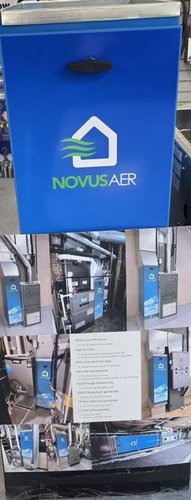
NovusAer — Local Utah Company (North Salt Lake, UT)
MERV 16 certified per ASHRAE 52.2-2017, tested by Blue Heaven Technologies. What makes NovusAer stand out is the initial pressure drop — only 0.04" WG at 263 CFM — incredibly low for a MERV 16 filter. That means high-grade filtration without choking your system's airflow.
- 99%+ particle removal efficiency at all sizes (0.35 microns and up)
- 230% more filtration surface area than Lennox MERV 16
- 5,700% more surface area than a standard furnace filter
- 157-pleat mini-pleat synthetic media design
- V-bank filter cabinet mounts directly to return air duct
- 5 models from 10" to 20" width, all 48" tall, 24" deep
- No noise, no fans, no moving parts, no additional electricity
- 10-year parts limited warranty to original owner
- 100% money-back satisfaction guarantee (first year)
- Sold exclusively through qualified HVAC contractors
- Patented design (US Patent 10,307,703B1)
IQAir Perfect 16 — Swiss-Made, Medical-Grade
The gold standard in whole-home air filtration. Swiss-engineered, MERV 16 rated, with up to 3-year filter life. Medical-grade air cleaning that integrates directly with your existing HVAC system.
- MERV 16 rated whole-home air filtration system
- Medical-grade air cleaning
- Up to 3-year filter life
- #1 air quality monitoring app (available on iOS and Android)
Dust Free Sixteen by RectorSeal (Houston, TX) — MERV 16 Media Air Cleaner
Superior MERV 16 media air cleaner that integrates into your return air stream for whole-home filtration. Reduces dust, dander, odors, and allergens. Part of the Dust Free IAQ3 platform:
- Elite IAQ: Maximum quality — Dust Free Sixteen + Active Gold UV + Carbon filtration
- Advanced IAQ: High quality filtration and purification
- Smart IAQ: Enhanced quality for improved air
- Standard IAQ: Good quality baseline filtration
Also available from Dust Free: Active Gold UV-C/ionization purifier, Carbon VOC filter, Lightstick germicidal UV
Mid Tier — MERV 16, 4–6 Months
- Lennox Healthy Climate Carbon Clean 16 — Great filtration (95%+ at 0.3 microns), but only lasts 4–6 months. Maybe a year if conditions are ideal. Used in Lennox PureAir systems.
Bottom Tier — Standard 1" Filters, 14–30 Days
The filters you buy at the hardware store. They fit in a standard 1-inch slot and need to be replaced every 2–4 weeks. In Utah — a dry, dusty climate — they clog fast.
In many Utah homes, the filter setup is a door cut into the return duct. You slide it open and lay the filter in at an angle, hoping for the best. When it gets dirty, it can clog and get sucked up into the equipment, or it falls over and all the air bypasses it completely — zero filtration. It's bad.
The right filtration isn't just a better filter — it's a properly sized filter rack, the right MERV rating balanced against airflow restriction, and a setup that actually holds the filter in place. We assess and recommend filtration upgrades on every service call.
Beyond Filters: Electronic Air Cleaners, UV Lights, Ionization & Humidifiers
Filtration is the foundation of indoor air quality, but it's not the only tool. Here are other IAQ technologies we recommend and install:
Electronic Air Cleaners
Electronic air cleaners use an electrical charge to attract and trap particles. They're effective at capturing very small particles that standard filters miss — down to 0.1 microns. The collection cells can be washed and reused, so there are no replacement filters to buy. The downside: they need periodic cleaning (usually every 1-3 months depending on conditions), and performance drops significantly when the cells are dirty. The NovusAer and Dust Free systems mentioned above combine the best of both worlds — high-efficiency media filtration with minimal maintenance.
UV Germicidal Lights
UV-C lights installed inside the duct system or near the evaporator coil kill mold, bacteria, and viruses as air passes through. They don't filter particles — they sterilize biological contaminants. UV lights are especially useful for keeping the evaporator coil clean (mold loves damp coil surfaces) and reducing airborne pathogens. Products like the Dust Free Lightstick series are reliable and well-tested. UV lights work best as a complement to good filtration, not a replacement for it.
Ionization Systems
Ionizers release charged ions into the air stream. These ions attach to airborne particles, causing them to clump together and become large enough to be captured by your filter — or to settle out of the air onto surfaces. Some ionizers also help neutralize odors and VOCs. Products like the Dust Free Active Gold combine UV-C with ionization for a dual-technology approach. The key: ionization works best when paired with adequate filtration. Ions make particles bigger so your filter can catch them — if your filter is a basic 1" throwaway, you're not getting the full benefit.
Humidifiers — Critical for Utah's Dry Climate
Utah is one of the driest states in the country. In winter, indoor humidity can drop below 20% — which is drier than the Sahara Desert. Low humidity causes dry skin, cracked lips, nosebleeds, static electricity, cracking wood floors and furniture, increased susceptibility to respiratory infections, and general discomfort. A whole-home humidifier solves all of this.
Our Recommendation: AprilAire Steam 800
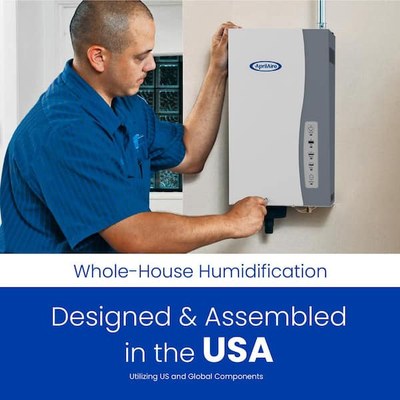
We recommend the AprilAire Steam 800 for Utah homes. Here's why:
- Handles hard water: Utah has notoriously hard water. The Steam 800 uses electrode technology that actually requires mineral content in the water to function — so hard water is a feature, not a problem. No water filtration needed. No softener required.
- Dual voltage: Wired at 120V it produces 11.5 gallons/day (up to 2,500 sq ft tight construction). At 240V with 16-amp draw, it produces up to 34.6 gallons/day — enough for a 6,200 sq ft tightly built home.
- Independent of furnace: Steam humidifiers don't need the furnace to be running. They generate their own heat to create steam. This means humidity control 24/7, not just when the heat kicks on.
- Simple maintenance: Replace the canister once per season. No scrubbing, no cleaning. Replace electrode wires every 3 years.
- Precise control: Dual-sensor automatic mode monitors both outdoor temperature and indoor humidity. Set it and forget it.
- 5-year warranty. Designed and manufactured in the USA by AprilAire — the inventor of the whole-house humidifier, and the leader in indoor air quality since 1954.
Why steam over evaporative? Evaporative humidifiers (AprilAire 500, 600, 700) are good products and cost less — but they depend on warm furnace air to evaporate water, they use more water (much of it goes down the drain), and the water panels need more frequent replacement. In Utah's extreme dryness, steam is more effective, more consistent, and lower maintenance long-term despite the higher upfront cost.
Signs Your System Needs Attention
- Rooms that are always too hot or too cold
- System runs constantly but never reaches the thermostat setpoint
- High energy bills despite "new" equipment
- Unusual noises — banging, squealing, rattling
- Musty or stale air
- Visible dust around registers
- Thermostat shows a big gap between setpoint and actual temperature
If you're experiencing any of these, the problem is almost always airflow — not the equipment. A service call with measured diagnostics will tell you exactly what's going on.
The 90% Furnace Condensate Problem
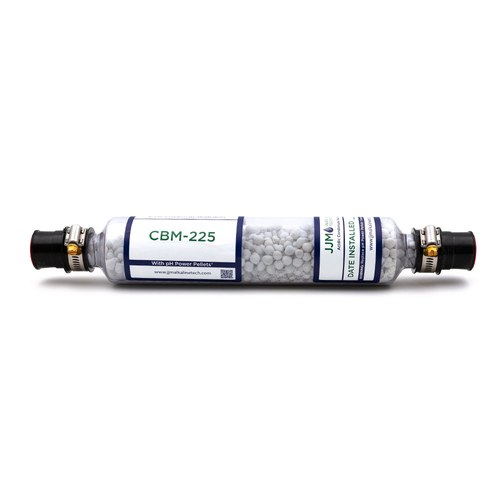
If you have a 90% or higher efficiency furnace (also called a condensing furnace), it produces acidic condensate as a byproduct of combustion. This liquid drains into your plumbing system. Without a condensate neutralizer, the acid slowly corrodes your drain pipes, P-traps, and sewer connections.
A neutralizer (like the JJM CBM-225) costs under $100 and uses calcium carbonate media to neutralize the acid before it hits your plumbing. Almost nobody installs them or even mentions them. Ask your HVAC company if you have one. If they don't know what you're talking about, that tells you something.
Why 10 Companies Give You 10 Different Answers
You call 10 HVAC companies about the same problem and get 10 different diagnoses. Why? Because most of them are guessing. They don't measure airflow. They don't check static pressure. They don't verify duct sizing. They look at the equipment, see symptoms, and guess at a cause — usually one that involves selling you something new.
The truth is, most comfort problems are airflow problems, and most airflow problems are ductwork problems. Until someone actually measures what's happening, they're just guessing. We measure everything.
Remote Consulting Service
Not sure if you're getting the right advice? Send us photos of your equipment, ductwork, invoices, or quotes from other companies. For $75, we'll review everything and give you an honest assessment. If we need to talk it through, that includes up to 15 minutes on the phone.
| Service | Price |
|---|---|
| Photo/Document Review | $75 |
| Includes phone consultation | Up to 15 minutes |
| Additional phone time | $50 per 15 minutes |
Email your photos and documents to info@polarbreezeut.com or text them to (385) 292-7511.
Floor Registers: Why We Don't Use Them
Floor supplies collect everything gravity can deliver: dust, pet hair, kids' toys, food, construction debris, coins, you name it. They're harder to clean, they restrict furniture placement, and the airflow pattern is fighting gravity instead of working with it.
We place all supply registers in ceilings or high side walls. Returns go on low walls. Better air distribution, better air quality, easier maintenance.
Photos of construction debris in floor registers coming soon.
Flame Rectification: The Magic Behind Your Furnace
Ever had a tech tell you "your flame sensor is dirty" and charge you $150 to clean a little metal rod? Here's what's actually happening — and why it matters.
Your gas furnace uses a flame rectification sensor — a small metal rod that sits in the burner flame. It works by exploiting a property of fire: a flame conducts electricity, but only in one direction. The control board sends a tiny AC signal through the sensor. If a flame is present, the flame "rectifies" (converts) that AC signal into a small DC current — typically 1-6 microamps. The control board reads this DC current and says "yes, flame is burning, keep the gas valve open."
If the sensor is dirty — coated with carbon, oxidation, or combustion byproducts — it can't conduct that signal properly. The board reads zero or near-zero microamps, panics, and shuts the gas valve off. No flame signal = no gas = no heat. The furnace tries to light, runs for a few seconds, and shuts down. Three failed attempts and it locks out.
The fix is usually simple: clean the sensor with fine emery cloth or steel wool, reinstall it, and the furnace fires right up. A 5-minute job. But understanding WHY it works helps you recognize the symptoms: furnace lights, runs for 3-8 seconds, then shuts off and tries again.
When it's NOT just a dirty sensor: If cleaning doesn't fix it, the issue could be a cracked sensor, a failing control board, a grounding problem, or a flame that's too weak (gas pressure issue). This is where proper diagnosis matters — not just throwing parts at it.
Common HVAC Problems and What to Do
AC Running But Not Cooling
Check your filter first — a clogged filter restricts airflow and the system can't move enough air to cool. Check that the outdoor unit is running (you should hear the compressor and fan). If the outdoor unit isn't running, check the breaker. If everything looks normal but it's not cooling, the issue could be low refrigerant, a failed compressor, a frozen coil (often caused by low airflow from a dirty filter), or a failed capacitor.
What to do: Change the filter. Check breakers. If it's still not cooling after 30 minutes with a clean filter, call a professional.
Furnace Won't Stay Lit
This is the flame sensor issue described above — the furnace lights, runs a few seconds, and shuts off. Could also be a gas pressure issue, a failing inducer motor, or a cracked heat exchanger (serious safety concern — call a professional immediately if you smell gas or see visible cracks).
What to do: If the furnace keeps trying and failing, turn it off at the thermostat and call a professional. Do not keep letting it cycle — repeated failed ignitions can be a safety hazard.
System Runs Constantly But Never Reaches Temperature
This is the most common complaint we hear. The system runs and runs but the house never gets comfortable. 90% of the time, this is NOT an equipment problem — it's an airflow problem. The ductwork can't deliver enough conditioned air to the rooms. The equipment has the capacity; the ducts are the bottleneck.
What to do: Check your filter. Make sure all registers are open. If the problem persists, you need an airflow diagnostic — not a new AC unit.
Weird Noises
- Banging or popping: Ductwork expanding and contracting (common, usually not dangerous). Can also indicate delayed ignition in a furnace (get this checked).
- Squealing or screeching: Belt or bearing issue in the blower motor. Turn it off and call for service.
- Rattling: Loose screws, panels, or components. Could be a failing blower wheel or motor mount.
- Hissing: Refrigerant leak or air escaping from ductwork. Call a professional.
- Clicking: Normal at startup/shutdown. Constant clicking = possible relay or control board issue.
Ice on the Refrigerant Lines or Coil
A frozen coil is almost always caused by restricted airflow (dirty filter, collapsed duct, blocked return) or low refrigerant charge. Do not try to chip off the ice. Turn the system to FAN ONLY and let it thaw completely (may take several hours). Then check your filter. If it freezes again with a clean filter, you have a refrigerant issue — call a professional.
HVAC Myths That Cost You Money
"Setting It Lower Makes It Cool Faster"
FALSE. Your AC has one speed of cooling output (unless you have a modulating system). Setting the thermostat to 65°F doesn't make it cool any faster than setting it to 72°F. It just makes it run longer. The system cools at the same rate regardless of the setpoint. All you're doing is making it overshoot and waste energy.
"Closing Vents in Unused Rooms Saves Energy"
FALSE — and it can damage your system. Closing vents increases static pressure in the duct system, reduces total airflow, and forces the blower to work harder. It can cause the evaporator coil to freeze, increase energy consumption, and shorten equipment life. Your duct system was designed (or should have been) for a specific amount of airflow. Closing vents throws that balance off.
"Bigger AC = Better Cooling"
FALSE — and it's the #1 problem in the industry. An oversized AC cools too fast, short-cycles (runs 5-8 minutes instead of 15-20), never properly dehumidifies, uses more energy, and wears out 30-40% faster. Plus it costs $1,500-$3,000 more upfront. Proper equipment sizing through a Manual J calculation is how you get the right size — not guessing.
"You Only Need to Change Your Filter Once a Year"
It depends on the filter. Standard 1" filters need changing every 14-30 days. 4" media filters every 3-6 months. MERV 16 whole-home systems like NovusAer or IQAir can last up to 3 years. Check your filter monthly regardless — Utah is dusty, and every home is different.
When to Turn It Off and Call a Professional
Most HVAC problems are inconveniences, not emergencies. But some situations require immediate action:
Turn Off the System AND Call Immediately If:
- You smell gas. Turn off the furnace at the thermostat, leave the house, and call your gas company's emergency line. Do not flip light switches or use your phone inside the house.
- You see visible damage to the heat exchanger. Carbon monoxide risk. Shut it down.
- Water is flooding from the unit. Turn off the system to prevent further damage. This is usually a condensate drain issue — not dangerous, but can cause water damage quickly.
- You hear electrical arcing or see sparks. Turn off the breaker to the unit immediately.
Know Your Breakers
Every homeowner should know which breakers control their HVAC equipment. Typically you'll have:
- Furnace/air handler breaker — controls the indoor unit, blower, and control board
- AC/heat pump breaker — controls the outdoor unit (usually a double-pole 30-50 amp breaker)
- Thermostat — powered by the furnace transformer. If your thermostat is blank, check the furnace breaker first.
Before any service call: Verify breakers are ON. This saves you a trip charge for something you can check yourself in 30 seconds.
Contracts & Agreements
Current versions of all Polar Breeze LLC agreements and forms. These documents may be updated at any time — clients will be notified via email of any changes.
New Construction / Major Remodel
Existing Homes
Service
Note: These agreements may be modified or updated by Polar Breeze LLC at any time. Clients will be notified via email of any changes. We recommend all parties have agreements reviewed by qualified legal counsel before execution.
Have Questions? We Have Answers.
Whether you need a service call, a second opinion, or just want to understand what's going on with your system — we're here to help.